
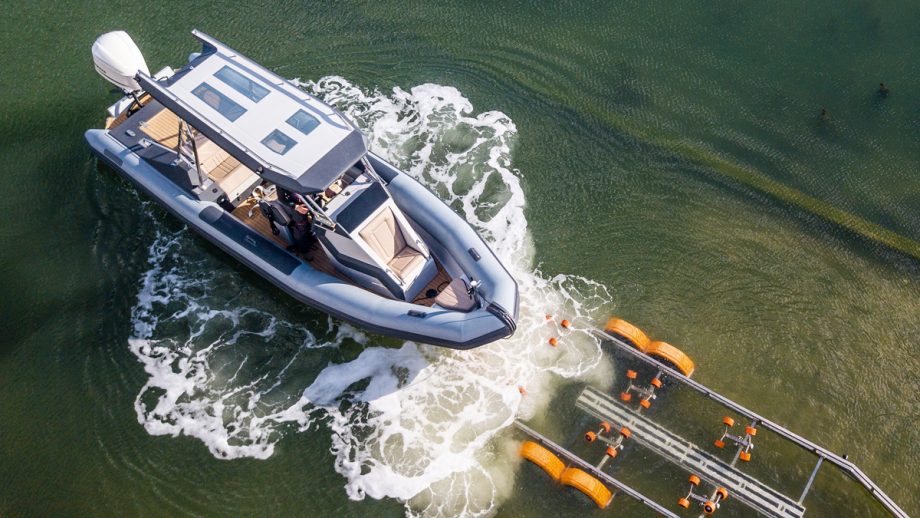
If you have spent any time on UK slipways, you have probably heard strong opinions about carpet for bunks on boat trailers. Some skippers swear by it, others rip it off and never look back.
This guide walks through when carpet for bunks on boat trailers genuinely helps, when it quietly does more harm than good, and which alternatives suit different hulls and budgets, so you can decide whether to keep it, replace it or move to plastic, synthetic boards or rollers.
Carpet for Bunks on Boat Trailers: A Simple Yes/No Checklist for Boat Owners

Before we dive into materials and fitting tricks, a quick checklist helps you see where you stand. It is not perfect science, yet it gets you close to the right answer for how you actually use carpet for bunks on boat trailers in the UK.
| Question | If your answer is “Yes” | If your answer is “No” |
|---|---|---|
| Is your boat aluminium and used in salt or brackish water? | Strong reason to move away from carpet for bunks on boat trailers towards plastic covers or synthetic boards. | Carpet for bunks on boat trailers can still work, other factors decide whether it suits you. |
| Do you launch more than twenty to thirty times each season? | Heavy use loads the bunks with grit and moisture, low maintenance alternatives pay off. | Lighter use means good quality carpet usually copes well for longer. |
| Is your trailer stored outside in typical UK weather? | Boards stay damp for days, which speeds up rot under carpet for bunks on boat trailers. | Garaged trailers let things dry out, which is kinder to timber and fittings. |
| Does the bunk covering show tears, bald patches or soft spots underfoot? | Time for a proper inspection and probably a rethink of the whole set up, not just a patch. | You have breathing space to plan an upgrade instead of rushing one weekend. |
| Are you confident doing basic DIY drilling and measuring? | You can fit plastic covers or synthetic boards yourself and save quite a bit. | Carpet for bunks on boat trailers may remain the easiest option if you rely on a yard to do the work. |
If most of your answers fall into the left column, you are exactly the sort of owner who will benefit from moving beyond basic carpet for bunks on boat trailers. If they lean to the right, you can usually keep what you have, as long as it is fitted well and looked after.
Carpet for Bunks on Boat Trailers: What It Actually Does for Your Boat

In glossy brochures, carpet for bunks on boat trailers looks almost luxurious. It is tidy, often dark grey or navy, and feels kinder than bare timber when you run your hand along it. Dealers rarely question it, because most UK trailers arrive like this as standard equipment.
In reality, the job is simple. Carpet for bunks on boat trailers spreads the load so the hull does not sit on a single hard line. It adds just enough grip that the boat stays put when you stop on a slope. It also stops small splinters in the timber from scratching the gelcoat on short journeys.
The benefits rely on three quiet assumptions. The carpet must drain and dry between trips. It should stay reasonably clean rather than hoarding grit in the fibres. The timber underneath needs to remain solid. Once any of those fail, carpet for bunks on boat trailers turns from bodyguard into slow villain.
To keep things honest, it helps to list the core pros and cons in one place, rather than pretending carpet is always wonderful or always awful.
- Pros: spreads hull load, adds gentle grip, cheap to replace, easy for most UK yards to work with.
- Cons: traps water and sand, hides rot, can scuff aluminium, needs more inspection than most owners realise.
Do boat trailer bunks really need carpet at all?
Under all the marketing, a simple question sits quietly. Do your bunks actually need carpet for bunks on boat trailers, or have you just inherited it with the trailer and never really thought about it again. It is a fair question, especially if you are watching your costs.
What you truly need is good support, a steady parking position and smooth launching. Those three things can be delivered by different set ups, including plastic covers and roller combinations. Carpet for bunks on boat trailers is just one way of solving the physics. It is not a rule written into maritime law, and you are allowed to choose something that suits your boating life better.
If your boat spends a lot of time afloat rather than on the trailer, storage becomes part of the same conversation. In that case it is worth reading the mooring versus docking guide on MarineFuse so you can choose between bunk storage, moorings and berths with the full picture in mind.
When Carpet for Bunks on Boat Trailers Causes More Harm

There is a reason experienced skippers in coastal marinas quietly shake their heads at sagging bunk coverings. On busy slipways around Poole, Plymouth or the Clyde, you can almost feel the grit grinding through that soft layer every time a boat is winched on to carpet for bunks on boat trailers.
Aluminium boats, saltwater and carpet for bunks on boat trailers
Aluminium hulls are brilliant for rough beaches and Scottish lochs. They are light to tow, shrug off small knocks and let you nose gently onto stony shores. What they truly dislike is long term contact with damp, salty fabric pressed hard against the metal.
The fibres in carpet for bunks on boat trailers behave like a sponge, drawing in saltwater and holding it against the plating. Fine sand from the slipway works its way into the weave and never really leaves. Each time you recover the boat, that mixture rubs the same areas again and again. At first you lose shine, then faint scuff bands appear along the chines.
If the boards themselves are older pressure treated timber, there is a further twist. Some treatments do not play nicely with aluminium at all. You end up with moisture, salt and awkward chemistry trapped together. It is not instant disaster, but it quietly shortens the life of a hull that should have many more seasons in it.
Heavy use and hidden rot under carpet for bunks on boat trailers
The second big issue shows up with heavy use. Picture a keen angler towing down to the south coast most weekends from March to October. After each trip, the boards are soaked and the carpet for bunks on boat trailers is heavy with water. The boat comes off, then everything sits in a breezy yet wet British car park.
Because the covering hides the timber, you cannot see what is happening underneath. Moisture finds any small crack in the paint or sealer then works slowly into the grain. I have peeled off tired carpet for bunks on boat trailers on more than one rig and found the boards black, soft and spongy while the outside still looked almost respectable.
That rot is not just cosmetic. One hard bump in a pothole on the A roads and a weakened board can twist or even split. When the only thing between your boat and the steel frame is rotten wood backed by carpet for bunks on boat trailers, you suddenly wish you had checked a season earlier.
Warning signs your bunk covering is past its best
The good news is that most trailers whisper before they shout. You usually get warning signs before anything dramatic happens. The trick is to build a quick visual and touch check into your normal wash down routine, instead of assuming carpet for bunks on boat trailers can be ignored for years.
Look for edges that are fraying or peeling away from the timber. Run your fingers along the boards and note any lumps, dips or sharp feelings under the fabric. Kneel by the rear cross member and sniff, it sounds odd, yet a strong musty smell is often the first clue that water is trapped.
If the winch suddenly feels harder work than last year, and nothing else has changed, that is another clue. Waterlogged carpet for bunks on boat trailers acts like dragging a wet blanket up the slipway. When two or three of these hints line up, it is time to plan action rather than wait until something fails on a bank holiday.
When Carpet for Bunks on Boat Trailers Still Makes Sense

After all that, you might think I am strongly against the traditional way. That would be unfair. In plenty of real world British situations, carpet for bunks on boat trailers is still a sensible, cost effective choice, especially for glass fibre hulls and mild inland water.
Typical setups where carpet for bunks on boat trailers is still fine
Imagine a sixteen foot fibreglass cuddy that spends most of its time on Windermere or Rutland Water. The ramps are concrete, the slipways are maintained and you only launch every other weekend through summer. In winter, the whole rig sits in a dry barn on carpet for bunks on boat trailers that has plenty of time to dry.
Here the covering has an easy life. It has time to breathe, the water is low in salt and the grit load is modest. A well chosen carpet for bunks on boat trailers in that setting can last far longer than people expect. The key is making sure it was fitted neatly in the first place and not forgotten entirely afterwards.
Using carpet for bunks on boat trailers as a budget stop gap
Sometimes money makes the choice for you. Maybe you have just upgraded electronics or paid for an engine service. The last thing your wallet wants is a big bill for fancy composite boards. So you do what many boaters do and plan a careful re cover instead.
The important mental trick is to see new carpet for bunks on boat trailers as a bridge, not a forever fix. If you are spending time and effort doing the job, take the opportunity to check the boards, brackets and fixings properly. Then set a realistic timeline. Perhaps you run the new carpet for bunks on boat trailers for three more seasons while you stash cash away for a bigger upgrade.
Which type of carpet is best for a boat trailer bunk?
If you are going to keep this style of support, at least give yourself the best version of it. Look for marine grade products designed to behave well as carpet for bunks on boat trailers. The backing should resist water and the pile should feel fairly dense and smooth rather than coarse and scratchy.
Common choices include polypropylene and polyester based carpets. Polypropylene marine carpet tends to be affordable and dries quickly, but is less resistant to harsh sunlight. Polyester carpets usually cost a little more, yet cope better with UV and stay looking good for longer. Either can work as carpet for bunks on boat trailers as long as the quality is decent and the backing does not crumble when wet.
People often ask if they can simply use leftover outdoor carpet from a patio project. While it is tempting, it usually performs poorly on bunks. Many of those products shed fibres and backing within a couple of wet seasons. Some are surprisingly abrasive once grit gets involved. Spending a bit more now on true carpet for bunks on boat trailers saves you crawling under the trailer again very soon.
Alternatives to Carpet for Bunks on Boat Trailers
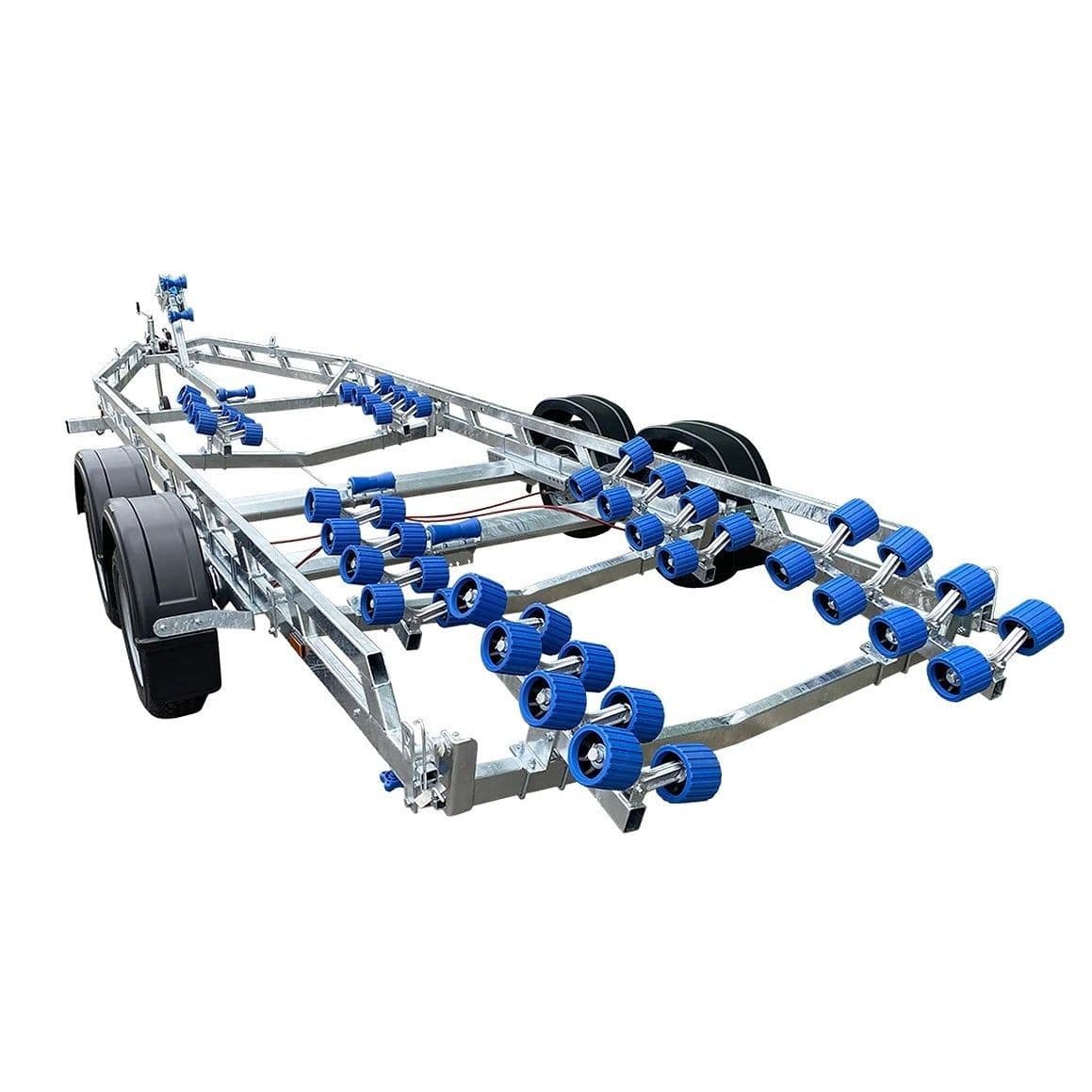
Modern materials give us options that my dad would have loved twenty years ago. Instead of always re covering the timber, you can choose smooth plastic covers, fully synthetic boards or clever roller combinations. Each has its own personality on the ramp and behaves differently to traditional carpet for bunks on boat trailers.
If I do not want marine carpet, what can I put on my bunks instead?
Your main choices are plastic covers that clip over existing timber, full synthetic bunk boards that replace the wood, or mixed setups that combine bunks and rollers. All of them aim to reduce water absorption, rot and friction spikes while still guiding the hull into the right position.
Plastic or HDPE covers instead of softer materials
Plastic covers are a solid first step away from fabric. High density polyethylene strips or moulded sections sit on top of your boards. They offer a hard, smooth surface that does not soak up water. Grit tends to wash off instead of hiding in the material as it does with carpet for bunks on boat trailers.
The first launch after fitting them can be eye opening. The boat feels keen to slide, even with only a small push. That is wonderful once you are used to it, particularly on shallow slipways where you used to need a lot of throttle. You just need to adjust habits and keep the bow strap attached until the hull is actually afloat.
Full synthetic bunk boards that replace timber and fabric together
Full synthetic boards are the next level. They replace the timber completely with an engineered material that serves as structure and sliding surface in one piece. You bolt them straight to the trailer frame and set the brackets as you would with wood.
The pay off is long term stability. They do not rot, they shrug off water and there are no fibres to fray. They do cost more at the start, especially on a long twin axle trailer, yet if you tow often the years of hassle saved can make that spend much easier to justify compared with endlessly renewing carpet for bunks on boat trailers.
Owners who are already thinking about long term comfort and running costs, for example those comparing a catamaran versus pontoon boat, often find synthetic bunks fit naturally into that same “buy once, use for years” approach.
Rollers and hybrid setups as an alternative to softer bunks
Roller systems change the feel completely. Instead of sliding, the boat essentially rolls into place. On rivers with changing levels or in shallow tidal creeks this can feel like magic. A friend of mine on the Severn switched to a hybrid system and now launches his cabin boat alone in a few calm minutes.
Most modern installations mix rollers with fixed supports. The main weight still rests on boards or pads, while the rollers help at the bow and entry point. This lets you keep the reassuring parked stability of carpet for bunks on boat trailers while enjoying very low effort launches and recoveries.
To see how the movement looks, it is worth watching a short demonstration rather than just imagining it. Once you are confident with launch and recovery, stepping into evening passages becomes less stressful. If that idea appeals, the Sailing at Night for Beginners guide on MarineFuse is a good next read.
How to Choose Between Carpet for Bunks on Boat Trailers and the Alternatives
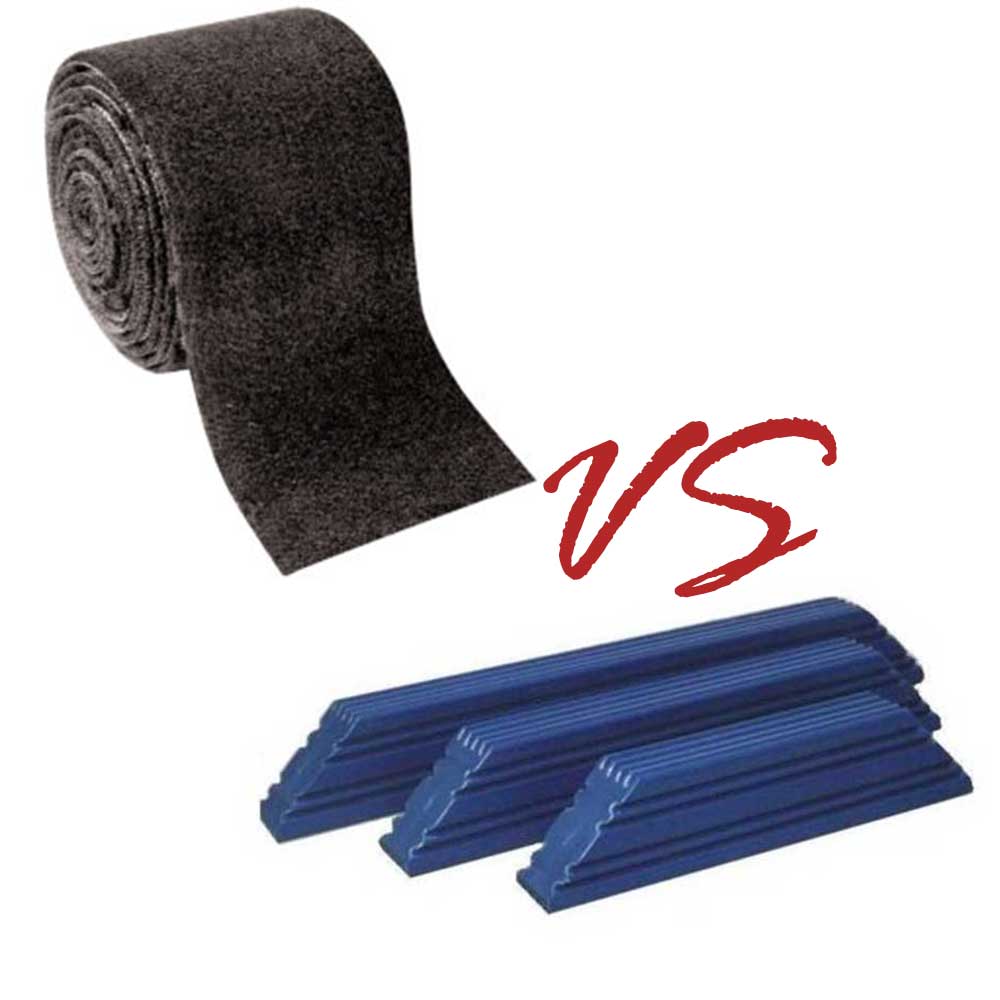
Suggested image alt text: “Flowchart helping owners choose between carpet for bunks on boat trailers and plastic or roller systems”.
At this point you know the tools in the box. The real question is how to combine your hull, your launch routine and your appetite for maintenance into one decision that actually works on a wet Saturday morning.
What is the best material to use for boat trailer bunks?
There is no single winner, but there is usually a best fit for your situation. Use this snapshot as a guide.
| Boat and usage | Recommended bunk surface | Why it usually works best |
|---|---|---|
| Light fibreglass boat, mostly fresh water, careful owner | Short pile carpet for bunks on boat trailers | Cheap and forgiving, provided you rinse and inspect regularly. |
| Aluminium fishing boat, frequent coastal launches | Plastic covers or full synthetic boards | Avoids wet fabric against metal and reduces corrosion risk. |
| Heavier cruiser on a purpose built trailer | Synthetic boards or hybrid bunks and rollers | Carries load cleanly and makes winching manageable. |
| Shared club trailer with many users and little maintenance time | Durable plastic or synthetic surfacing | Stands up to abuse better than budget carpet for bunks on boat trailers. |
As a rule of thumb, if you are not willing to lift the boat and inspect the bunks every season, then hard surfaces beat carpet for bunks on boat trailers. If you love tinkering and enjoy a small DIY project each spring, a carefully chosen marine carpet can still earn its place.
If You Keep Carpet for Bunks on Boat Trailers: Simple Care Tips That Actually Work
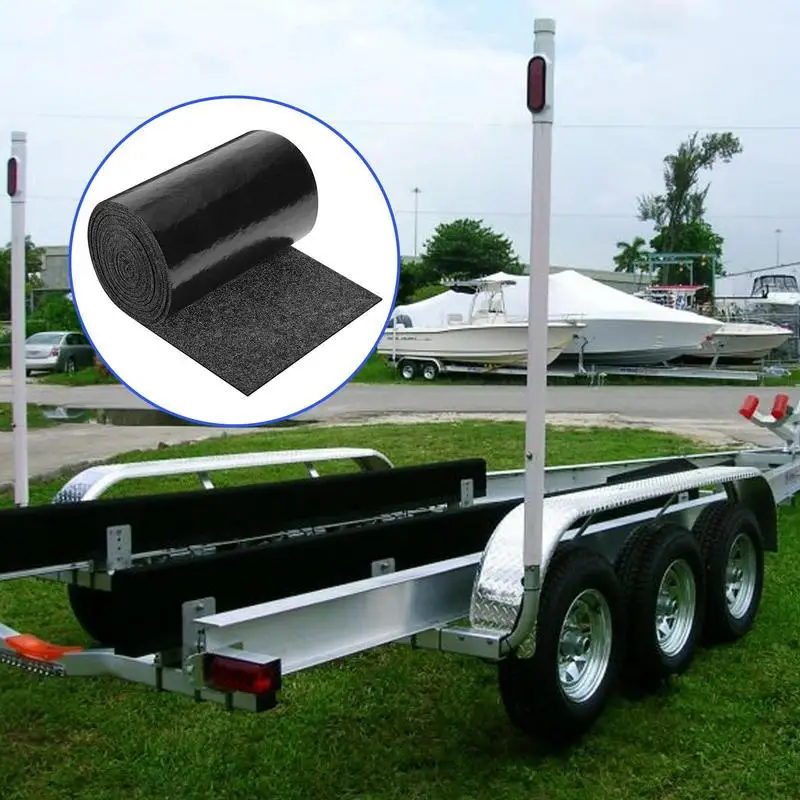
Suppose you have weighed it all up and decided to keep carpet for bunks on boat trailers for now. That is fine, as long as you treat the carpet as a consumable, not part of the trailer frame. A little routine goes a long way.
Choosing better carpet and timber for bunks on boat trailers
Start with the structure. Use straight, knot free timber, treated to suit outdoor use, and seal the cut ends before you see the slipway. Stainless fixings are worth the extra cost for trailers that touch salt water. When you fit the carpet, wrap it snugly but avoid thick overlaps that never fully dry.
Glue and staple only on the sides and underside of the bunk so there are no fasteners directly under the hull. That way the working face of carpet for bunks on boat trailers stays smooth and free of sharp surprises if the pile wears thin.
Easy maintenance habits for carpet on bunks on boat trailers
Make rinsing part of your launch routine, not an afterthought. A simple hose down at home removes most of the salt and sand that would otherwise stay in the carpet. Once or twice a season, jack the boat just clear of the bunks so you can inspect the timber and hardware underneath.
Pay attention to how the boat feels when you recover it. If winching suddenly needs more muscle, or you hear grinding noises from the bunks, that is your early warning that the carpet has hardened with grit. Replacing carpet for bunks on boat trailers at that point is much cheaper than repainting a hull.
Making the Final Call on Carpet for Bunks on Boat Trailers
Boat ownership always involves trade offs. There is no universal rule that says every trailer must run plastic boards or that no one should ever use carpet for bunks on boat trailers. What matters is how your particular boat, trailer and routine come together on the ramp.
If you run a light glass boat in mostly fresh water and you are happy to re carpet every few years, then carpet can still be a practical, comfortable choice. If you own an aluminium hull, launch in salty, gritty harbours or rarely look underneath the trailer, it is time to move towards plastic, synthetic or roller solutions.
Take a quiet hour one evening, crawl around your trailer with a torch and really look at what your bunks are doing to the hull. Whether you keep carpet for bunks on boat trailers or strip it off entirely, that bit of curiosity will repay you many times over in fewer surprises, less corrosion and smoother days on the water.
Frequently Asked Questions: Boaters Whisper on the Slipway (And Honest Answers)
🚤Will changing my bunk surface really make launching and loading easier?
Yes, in many cases the bunk surface makes more difference than people expect. Old, waterlogged carpet creates a lot of drag, so the boat feels “stuck” until it suddenly moves. A fresh, low-friction surface such as plastic covers or well-finished synthetic boards lets the hull slide in a smoother, more predictable way. You still need to keep the winch strap or bow chain on until the boat is afloat, but the actual launch becomes more about guiding than wrestling.
🚤How often should I inspect the bunks if I tow a lot each season?
If you are on the ramp most weekends through spring and summer, a quick check every month is a sensible habit. That does not mean stripping the trailer; a torch, your hands and a few minutes are enough. Look for loose fixings, soft spots in the timber, frayed covering and any scuff lines on the hull that line up with the bunks. A deeper inspection once a year, where you lift the hull slightly to see the top of the boards, helps you catch rot and corrosion before they become expensive repairs.
🚤Is there a “too slippery” point where plastic or rollers become unsafe?
There is such a thing as too little friction, but it is mostly about habits rather than the material itself. Hard plastics and roller systems are designed to reduce effort, so the boat will move as soon as it is not properly secured. As long as you always keep the bow strap or safety chain attached until the hull is over the water, and never stand behind a loose boat on a slope, those systems are safe and very convenient. Problems usually happen when people treat low-friction bunks like old, draggy carpet and get casual with their routine.
🚤Does trailer set-up change if I switch from carpet to plastic or synthetic bunks?
Most of the basic geometry stays the same, but a material change is a good moment to fine tune things. Check that the bunks still follow the hull shape and that they carry the weight across their full length, not just on the corners. With plastic or synthetic boards, many owners lower the bunks slightly or adjust the winch post so the boat sits a touch deeper between the mudguards, which improves stability on the road. A careful re-set now makes the new surface feel natural from the first trip.
🚤What else can I do to protect my hull besides changing the bunk material?
A lot of long-term protection comes from simple routines rather than fancy hardware. Rinse the trailer thoroughly after saltwater use, including the undersides of the bunks. Avoid powering the boat hard onto the trailer whenever you can, because prop wash and hull momentum grind grit into the support surface. Touch up chips in the hull’s protective coating before another season of towing, and keep tyres, bearings and lights in good order so you are not tempted to rush launch and recovery at the ramp. A calm, repeatable routine protects gelcoat and metal just as much as any choice of bunk covering.
A Real Bunk Carpet Replacement (Step-by-Step)
References
- Palmer, E. How to completely replace your boat trailer bunk carpets. Better Boat.
https://betterboat.com/blogs/video-reviews/how-to-completely-replace-your-boat-trailer-bunk-carpets - Sailrite Enterprises Inc. How to replace boat trailer bunk carpet. Sailrite.
https://www.sailrite.com/Boat-Trailer-Bunk-Carpet-Replacement-Video - Engines.com. Quick tip: How to replace the carpet on your boat trailer bunks. Engines.com.
https://engines.com/blogs/marine-engines/quick-tip-how-to-replace-the-carpet-on-your-boat-trailer-bunks - ’Cuda Powersports. Replacing your boat trailer bunk boards: A complete guide. ’Cuda Powersports.
https://cudapowersports.com/blogs/news/replacing-boat-trailer-bunk-boards - Matthew, M. Eco-friendly boating: How to protect our waters while enjoying the ride. Westland Covers.
https://westlandcovers.com/blog/post/eco-friendly-boating
How to Make Your Sailing More Sustainable with Eco-Friendly Boating Practices?
Monohull vs Catamaran: which is better for cruising, comfort and cost?
Top Electric Outboard Motor for Eco-Tourism, Workboats & Retrofits: 2026 Brand Comparison
Comments are closed