
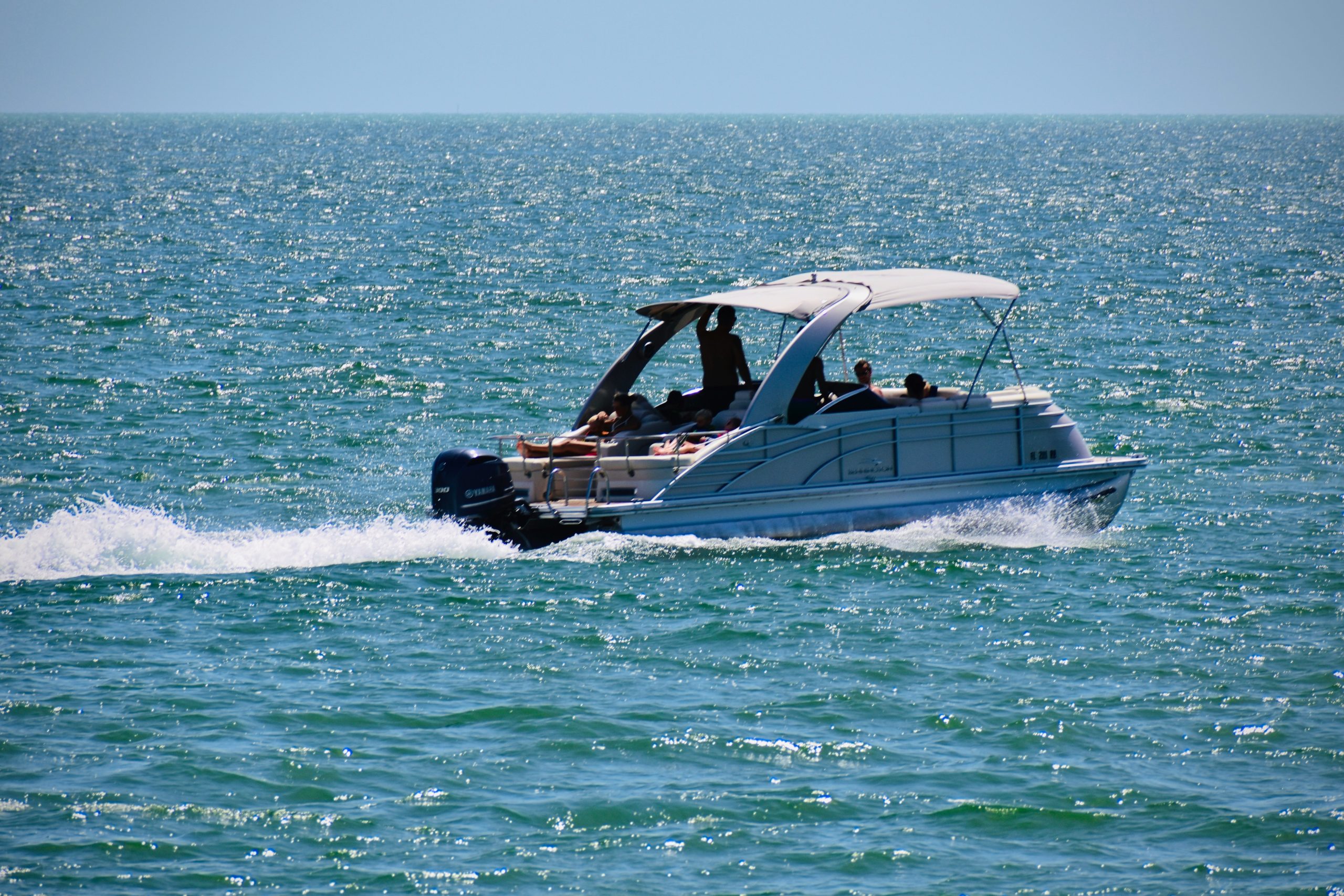
You might have seen a tidy twin hull gliding past Cowes, then later spotted a wide deck boat doing a slow lap somewhere inland, and thought, “Both look perfect, so why does choosing feel so confusing?” You are not alone. This guide is built to make the catamaran vs pontoon decision feel clear, human, and genuinely useful.
We will keep it real. Think tidal ramps, gusts sneaking down marina fairways, and that one friend who says they are “fine” with spray, then goes quiet after the first splash. I will give you practical checklists, call-outs, and a few do-not-do-this moments that save stress fast. And yes, we will cover the difference between a catamaran and a pontoon in plain English.
“Tea, Tide, and Truth” Cheat Sheet Before You Choose a Boat
| Your UK boating reality | Most suitable pick | Why it is appropriate for that day | One thing to watch |
|---|---|---|---|
| Inland cruising, picnics, swim stops, lots of people moving around | Pontoon | Big deck, social seating, steady feel at rest | Windage can push you about when docking |
| Tidal rivers and estuaries, short hops, variable breeze | Depends | Pontoon suits slow social days, cat suits travelling and tracking | Check slipway width, tide windows, and berth options |
| Coastal bays and longer legs on settled forecasts | Catamaran | Comfort underway, efficient hulls, confidence over distance | More systems and sometimes higher mooring cost |
| Mostly boating with kids and nervous first timers | Pontoon | Rails, gates, easy ladder routines, “floating lounge” vibe | Keep weight balanced, do not overload because it feels roomy |
| Watersports and towing for fun rather than maximum speed | Depends | Pontoon is friendly and social, cat can track cleanly at cruise | Choose safe tow point, clear driver and spotter script |
| Fishing days, mostly anchored or drifting | Pontoon | Space for rods and kit, stable platform at rest | Chop can tire you out if you run fast between spots |
| Fishing days, moving grounds and dealing with swell | Catamaran | More composed travel, less fatigue on longer legs | Be disciplined with speed and angle in short chop |
| You hate “boat admin” and want the simplest ownership rhythm | Pontoon | Often simpler day-to-day, especially for inland use | Salt use increases corrosion and cleaning demands |
| You want a boat that changes how you travel, not only how you lounge | Catamaran | Built for going places, often more comfortable over distance | Training and routines matter, especially in marinas |
Choosing Between a Catamaran vs Pontoon Boat: The 60-Second Pick for Your Kind of Day
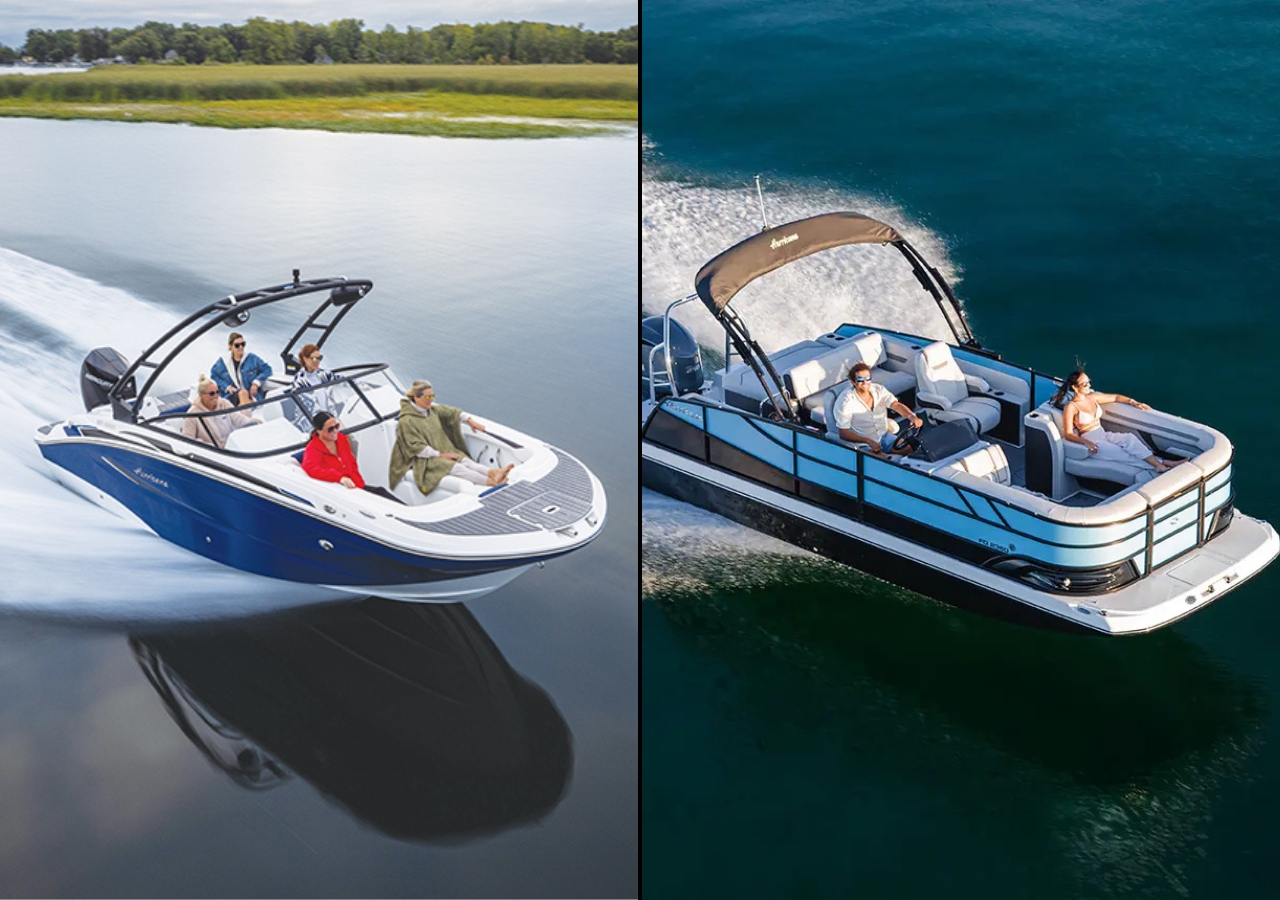
Let us not make you scroll for ages. If your most common day is slow cruising, swimming, snacking, and moving around like you are in a floating living room, a pontoon usually wins the catamaran vs pontoon pick. If your most common day is covering miles, coastal hops, and wanting a boat that feels composed when water gets lively, a catamaran usually wins.
Now do the honest test. Picture your next three weekends, not your dream holiday week. The best catamaran vs pontoon choice is the one that fits your default day, because that is the boat you will actually use, not just admire.
| Your most common UK day | Best fit for that day | Why it feels easier | One trade-off to accept |
|---|---|---|---|
| Calm inland cruising, lunch stops, lounging | Pontoon | Big deck, easy movement, stable feel at rest | Windage can make docking feel busier |
| Tidal river and estuary days, changing current | Depends | Cat tracks well underway, pontoon wins for slow social days | Slipway access and berth options may decide it |
| Coastal hops, bays, and longer legs on good forecasts | Catamaran | Confidence and comfort when waves build | More systems, often higher mooring costs |
| Family swim days with kids and non boaters | Pontoon | Ladders, shade, and a social layout that feels familiar | Chop at speed can feel bouncy on some designs |
What makes a boat a catamaran?
A catamaran has two full hulls joined by a deck or bridgedeck. Those hulls are shaped to travel through water efficiently, not just float. When people talk about a catamaran hull, they usually mean the way each hull slices, lifts, and tracks, which changes how the boat feels at speed and in chop.
In the catamaran vs pontoon conversation, this matters because cats often feel calmer over distance. They can also feel more “direct” to handle, because the platform responds quickly to trim and throttle changes. That responsiveness is fun, but it rewards early, small inputs rather than late, big ones.
Also, not every cat is the same. A catamaran sailboat has sails, rig loads, and reefing routines. A power cat leans more into speed, tracking, and engine handling. The platform idea is shared, but the day to day experience can differ a lot.
If you are leaning cat because you want proper cruising range and comfort, this deeper comparison helps you sanity-check the next step: monohull vs catamaran: which is better for cruising comfort and cost
Why are they called pontoon boats?
A pontoon boat is typically a wide deck supported by two or three buoyant tubes, often aluminium. The tubes provide lots of flotation and create a stable platform, especially at rest. That is why pontoons feel so friendly for families and social groups, even when half the crew has never held a boat hook before.
In the UK, “pontoon” also means the floating walkway you tie up to, so the term can confuse newer boaters. Here, we mean the deck boat with tubes underneath. In a catamaran vs pontoon choice, this is the boat that usually wins the “floating lounge” category.
What is the difference between a pontoon boat and a catamaran?
The difference between catamaran and pontoon is mainly purpose and shape. A catamaran uses two narrow hulls designed to move through water efficiently. A pontoon uses buoyant tubes designed to support a big deck and keep the platform stable and social. Both float well. They just “feel right” in different situations.
| Point | Pontoon boat | Catamaran |
|---|---|---|
| What it is built for | Easy social cruising and hanging out | Efficient travel and coastal exploring |
| Underwater shape | Two or three tubes supporting a flat deck | Two narrow hulls shaped to track and slice |
| Comfort in chop | Can feel bouncy at speed | Often smoother at cruise, can slap if pushed |
| Docking feel | Predictable, but windage can push it sideways | Twin engines can pivot very precisely |
| Space and movement | Big open deck, easy walkaround | More “zoned” areas, varies by layout |
| Costs that surprise people | Tube condition, corrosion control, cover and storage | More systems, berth costs can rise with beam |
Here is the simplest human way to remember it. A catamaran often feels like it wants to go somewhere. A pontoon often feels like it wants to hang out. In the catamaran vs pontoon debate, that one sentence explains more than most spec sheets.
Who usually loves each one, families, anglers, swimmers, and speed fans
Families with kids and non boaters often love pontoons because they feel familiar. People can move around, sit face to face, and the day does not feel like a constant “stay here, do not touch that” instruction. For social comfort, pontoon usually wins the catamaran vs pontoon vibe test.
People who love distance, exploring bays, and coastal travel often lean catamaran. That wide stance and efficient catamaran hull shape can reduce fatigue on longer legs. If your idea of fun is a journey plus a destination, the cat side of catamaran vs pontoon starts to look attractive.
Anglers split based on style. If you fish mostly stationary, the pontoon platform is brilliant. If you move grounds and deal with swell, a cat can feel more composed underway. Speed fans can go either way, but cats often deliver “comfortable speed” more naturally in the catamaran vs pontoon comparison.
Comfort: Seats, Shade, Spray, and the “Vibe”

Comfort is not only cushions. It is how your body feels after four hours, how dry you stay when the breeze lifts, and whether the crew stays cheerful when the water gets a bit lively. The best catamaran vs pontoon choice is usually the one that keeps your least confident passenger relaxed.
Competitor articles often act like comfort is a single score. Real comfort changes with speed, water type, and how crowded your boat feels. So we will compare comfort the way real crews experience it, moment by moment.
Are you more likely to get seasick on a catamaran?
Seasickness is about motion and expectation, not hull count. Some people feel better on a cat because rolling can be reduced. Others feel worse in short chop if the bridgedeck or hull rhythm creates a quick, repetitive motion. In UK waters, wind against tide can make that chop feel sharper than the forecast suggests.
In a catamaran vs pontoon context, pontoons can feel gentler at slow speeds on sheltered water, while cats can feel gentler when travelling across open stretches in settled conditions. If someone in your crew is sensitive, your best tool is route choice and speed choice, not bravado.
Ride feel at slow cruise and at speed, why your knees notice the difference
At slow cruising speeds, pontoons are pure ease. The platform feels steady, the seating is generous, and nobody feels like they need sea legs. That is why pontoons are popular for relaxed days, and why the pontoon side often wins the catamaran vs pontoon “easy mode” category.
At higher speeds, ride quality depends heavily on design, loading, and chop. Some pontoons can feel bouncy when waves stack up, and your knees notice repeated impacts long before you admit you are tired. Cats often find a smoother cruise band, but a catamaran hull can still slap if you drive into short steep chop at the wrong angle.
Space and layout, lounging, walkaround room, and where everyone ends up sitting
Pontoons are built around people flow. You get walkaround space, social seating, and that relaxed feeling where everyone can chat without being told to sit down. For mixed groups, the pontoon side usually wins the catamaran vs pontoon “hosting friends” test.
Cats vary. A catamaran sailboat often has a big cockpit and forward lounging space, but guests need a gentle briefing about where lines run and which areas stay clear during manoeuvres. Once people learn the zones, cats can feel like multiple little lounges in one boat, which is honestly a lovely vibe.
Noise, wind, and sun protection, what makes a day feel effortless
Shade is comfort insurance. Pontoons often come with generous bimini setups, which can turn a hot day into an easy day. Wind protection also matters more than people think in the UK, where sunshine and breeze love to show up together.
Cats can be wonderfully quiet under sail, and many cruising cats have solid shade options too, but it depends on fit out. In the catamaran vs pontoon choice, effortless days come from boring details: shade that stays up, drinks that do not slide, and a cockpit that stays calm during docking.
| Five minute comfort setup | What you do | What it prevents |
|---|---|---|
| Secure loose items | Stow bags, clip bottles, set one dry zone | Stress when wake hits |
| Shade and wind plan | Set bimini or canopy, pick a sheltered route option | Fatigue and grumpy passengers |
| Reboarding readiness | Ladder checked, towel spot, shoes plan | Awkward and risky reboarding moments |
By Water Type: Lakes, Rivers, Coastal, and Open Water

Water type is where the catamaran vs pontoon decision stops being abstract and becomes practical. The UK gives you calm inland water, tidal rivers, busy estuaries, and coastal stretches that can change mood quickly. Your boat should match your most common water, not the one you visit once a year.
If you only remember one thing from this section, remember this. A boat that feels perfect on a lake can feel like hard work on a windy estuary. A boat that shines offshore can feel like overkill for slow pottering. The right catamaran vs pontoon choice is the one that keeps your days easy most often.
Calm inland water, when a pontoon is pure joy
On calm inland water, pontoons are genuinely brilliant. You can cruise slowly, anchor, swim, and lounge without feeling like you are constantly managing the boat. The platform feels steady at rest, which is exactly what most casual crews want from the catamaran vs pontoon choice.
This is also where pontoons encourage good habits. You can set up a clear ladder routine, keep kids in view, and make the day feel like a floating picnic. If that is your normal weekend, you already have your catamaran vs pontoon answer.
Big bays and coastal hops, when a catamaran starts to make more sense
If you want coastal hops, a catamaran starts to earn its reputation. The efficient catamaran hull form can feel composed when swell and waves become part of the day. That matters in the UK, where a “fine” forecast can still produce lumpy patches near headlands and tide lines.
This is where the cat side of catamaran vs pontoon becomes attractive for tiredness reasons. A smoother ride over distance keeps crew energy higher, which makes every later decision easier, from anchoring to docking.
Wakes, chop, and wind, the conditions that change the whole experience
Chop and wind are the great mood changers. Wind against tide can stack short steep waves, and suddenly your “easy day” becomes a “why is everyone silent” day. This is where people start Googling are pontoon boats good in rough water, usually after they have already had a bouncy ride.
Here is the honest answer. Some pontoons cope fine in moderate chop, especially if you slow down and pick kind angles. Cats can feel smoother underway, but they can still slap if driven hard into short chop. In the catamaran vs pontoon decision, the safest skill is being willing to slow down early.
Trailering, launching, and access, how “easy” looks different for each
UK access is a real factor. Slipways can be tidal, steep, crowded, and sometimes narrow. “Trailerable” in a listing does not always match your local ramp. The practical catamaran vs pontoon question is whether you can launch and retrieve without turning it into a stressful event.
Pontoons can be wide, which affects towing and storage. Cats range from small trailer friendly designs to full cruising cats that live in marinas. If your goal is weekly use, pick the boat that fits your access reality, not your daydream.
For Activities: Family Cruising, Fishing, and Watersports

Activities are where the catamaran vs pontoon decision can feel personal. It is not only about design. It is about how you actually spend time, what your crew enjoys, and what stresses people out. A boat that matches your activities makes you feel like a capable skipper without trying.
Also, a gentle truth. Many people try to buy “one boat for everything”. You can do many things on either platform, but one will feel more natural for your most frequent activity, and that is the boat you will love long term.
Family picnic cruising and swimming days, ladders, space, and safety habits
For swimming days, pontoons are often the simplest win. The deck space makes it easy to supervise kids, keep towels and snacks organised, and avoid that slippery chaos moment when everyone climbs back onboard at once. For many families, pontoon wins the catamaran vs pontoon debate right here.
Cats can be great too, especially at anchor, but guests may need a light briefing about safe zones and lines. A catamaran sailboat also has rigging and sail controls that you want curious hands to respect. Once routines are set, family days can feel brilliant on either.
| Swim safety mini script | What you say | What you physically check |
|---|---|---|
| Before anyone goes in | “Engines off, keys in one place, ladder down.” | Engines off, keys visible, ladder deployed |
| Before you move again | “Headcount, ladder up, lines clear.” | All aboard, ladder secured, nothing trailing |
Fishing setups, rod space, stability at rest, and how you fight fish comfortably
Pontoons feel brilliant for relaxed fishing because you have room to move, lay out kit, and keep the boat stable at rest. It feels like fishing from a platform rather than from a tight cockpit. If you fish casually and socially, pontoon often wins the catamaran vs pontoon choice.
Cats shine when you move between marks and deal with swell. Underway comfort matters, because tired anglers make sloppy decisions. A stable, efficient catamaran hull can reduce fatigue over a longer day, which is a quiet safety advantage many people overlook.
Towing toys, tubing, wakeboarding, and why speed and tracking matter
Towing success is about control, not only power. You want steady speed, predictable turns, and clear communication. Many pontoons do family towing beautifully, because the platform is stable and the crew can supervise easily. For casual fun, pontoon often wins the catamaran vs pontoon vibe.
Cats, especially power cats, can track cleanly at speed, which can make towing feel tidy for confident riders. The key is your routine. If your routine is calm, the day is calm, whichever side of catamaran vs pontoon you pick.
| Tow run script | Driver says | Spotter says |
|---|---|---|
| Start | “Line clear, going gentle.” | “Rider ready, thumbs up.” |
| Speed change | “Adding a touch now.” | “Rider happy, keep it steady.” |
| Stop | “Slowing, neutral soon.” | “Rider down, line clear.” |
Entertaining friends, drinks, music, and the reality of moving around underway
This is where pontoons shine. The layout is built for face to face chatting and effortless movement. People who are not “boat people” often relax faster on a pontoon, which is why pontoon can dominate the catamaran vs pontoon hosting category.
Cats can be great for entertaining at anchor too, and some have lovely cockpit zones. Underway, especially on a catamaran sailboat, you may need guests to stay in safer spots during manoeuvres. That is not a downside, it is just a different social rhythm.
Handling and Safety in Real Conditions

This is where the best competitor articles often go vague. Handling and safety are not about being fearless. They are about being systematic. The boat that feels safest is usually the boat you have a routine for. In the catamaran vs pontoon debate, routines beat opinions.
We will cover rough water judgement, docking nerves, and the small mistakes that turn into big moments. I will also show you what not to do, because sometimes that is the quickest way to become a calmer skipper.
Are pontoon boats ocean worthy?
Some pontoons can handle sheltered coastal work in the right conditions, especially robust designs with sensible power. But “ocean worthy” is not a label you apply once and forget. It is a decision you make every time you go out, based on sea state, wind, tide, and your route to shelter.
If you are asking are pontoon boats good in rough water, the honest answer is that pontoons can become uncomfortable quickly in short steep chop, especially at speed. You can still be safe if you slow down, choose kinder angles, and stay conservative. In the catamaran vs pontoon reality, judgement matters more than marketing.
Low-speed control and docking nerves, visibility, windage, and confidence
Docking is where windage becomes personal. Wide platforms and high profiles can drift sideways, and suddenly your brain starts shouting unhelpful thoughts. The best fix is a repeatable script and a normalised abort. The calm skipper is the one who resets early.
A cat with twin engines can pivot beautifully with short bursts. A pontoon can be forgiving too, but it still needs slow approaches and early neutral. In the catamaran vs pontoon world, the number one docking mistake is simply approaching too fast.
| Docking reset routine | What you do | What you say |
|---|---|---|
| Abort early | Neutral, back out slowly, regain space | “Abort, reset, same plan.” |
| Re-brief roles | Confirm first line, fenders, and caller | “One voice, one line first.” |
| Re-approach slower | Walking pace, short bursts only, neutral early | “Slow is smooth.” |
Stability underway vs stability at anchor, what “stable” really means
This is a classic catamaran vs pontoon misunderstanding. Pontoons often feel very stable at rest. People can move around, sit anywhere, and the boat feels steady. That is perfect for social days and swim stops.
Underway stability is different. Cats often feel stable because the catamaran hull form tracks and runs flatter through waves. Pontoons can feel fine at low speed, then feel lively if chop builds. So define “stable” for your day, then pick the platform that delivers it most often.
Rougher water and open stretches, comfort limits, safe limits, and smart call-offs
Every boat has a comfort limit and a safety limit, and they are not the same. Many rough days become scary days because people push past comfort for too long, then fatigue makes decisions sloppy. In the UK, cold plus chop can drain energy quickly.
Here is the most practical rule in this entire catamaran vs pontoon guide. If the boat is making you tense, change something now. Speed, angle, route, or plan. The best skippers do not “tough it out”, they choose a better day.
- “We stay in shelter today, bigger run another weekend.”
- “We slow down and take a kinder angle, comfort first.”
- “We head back now while it is still easy.”
Common beginner mistakes on each type, and the quick fixes that prevent drama
Pontoon beginners often underestimate windage and overestimate stopping distance. The quick fix is slow approaches, neutral early, and making aborting normal. If you want a simple memory hook for catamaran vs pontoon docking, it is this: speed is the enemy, space is your friend.
Cat beginners often carry too much power or sail for too long, then react late. The fix is small early depower and less steering. And because you asked for real “do not do this” advice, here is a practical reminder that earns its keep.
What not to do on a pontoon boat is panic accelerate to “fix” drift near a berth. That often creates speed you cannot stop in time. The better move is neutral, short controlled bursts, and a clean reset. The calm approach keeps your catamaran vs pontoon day fun.
Costs: Purchase, Fuel, Storage, and Maintenance Reality

Cost is not just purchase price. It is fuel, storage, maintenance, insurance, and the little mistakes that become invoices. The cheapest boat is often the one you actually use often, without stress. In the catamaran vs pontoon debate, unused capability is expensive capability.
UK costs also have a seasonal flavour. Winter storage, lift outs, and maintenance windows matter. If you choose a boat that is hard to store or launch, you will use it less, and your “cost per happy hour” climbs quickly.
Purchase price and what you get for it, hull design, fit-out, and performance
Pontoons often look like strong value because you get so much usable deck for the money. You are buying space and simplicity. For many people, that simplicity is what turns boating into a weekly habit, which is a sneaky win in the catamaran vs pontoon decision.
Cats, especially cruising cats, can cost more because you are buying capability, systems, and often better distance comfort. If your dream includes coastal travel and longer legs, the cat side of catamaran vs pontoon can feel worth the extra spend.
Fuel and running costs, how weight, speed, and usage style change the bill
Fuel cost is driven by how you use the throttle. A pontoon at gentle speed can be reasonable. Push harder, carry more people, and run in chop, and fuel use climbs because the boat is working harder. Your habit matters more than your brand.
Cats can be efficient at cruise, but efficiency is not magic. Run fast and you pay. Sail and you save fuel, but you maintain sails and rigging on a catamaran sailboat. In the catamaran vs pontoon reality, your “how often and how hard” is the biggest fuel variable.
Maintenance reality, pontoons, corrosion, antifoul, engines, and storage routines
Pontoons have their own maintenance quirks. Tubes, fittings, and underside areas deserve attention, especially if you use salt water. Corrosion control and anodes matter. Storage and covers matter too, because UK weather loves to test your patience.
Cats have more surface area and often more systems. More hatches, more compartments, more fittings. That does not mean fragile. It means you need a rhythm, and a quick monthly check is usually enough to keep the catamaran vs pontoon ownership experience smooth.
Mooring, marina, and insurance considerations, what to ask before you buy
Beam matters. Cats can have wider beam, which can limit berth availability and raise costs in some places. Wide pontoons can face similar access issues. In the UK, this can be the silent deal breaker, so ask early, before you fall in love with a listing photo.
Insurance depends on use, location, and experience. If you plan coastal trips, declare it properly and ask what training or kit helps. The practical catamaran vs pontoon buyer is the one who checks these boring bits first, because boring planning creates fun days.
| Boat viewing questions | What you are really checking | Why it matters in the UK |
|---|---|---|
| Where will it live, and what does that cost? | Berth, mooring, storage, lift out access | Winter storage and marina availability can change everything |
| How does it handle at walking pace? | Docking confidence and windage behaviour | Crosswinds and tight berths are common |
| What water will you use most often? | Matching design to conditions | Tide and chop patterns are local and persistent |
What is the downside of the pontoon boat?
The main downside is that the easy platform can become wind sensitive and chop sensitive. In lively conditions, the ride can feel bouncy, and low speed handling near pontoons can feel busy. That is why the question are pontoon boats good in rough water comes up so often.
The second downside is social temptation. Because it feels roomy, people overload people and gear. Stay within capacity, keep weight balanced, and do not let the “floating lounge” vibe trick you into ignoring basic safety. In the catamaran vs pontoon world, good days come from good habits.
What are the disadvantages of a catamaran boat?
Cats can be more complex and can cost more to berth or store, especially if beam is a factor. They can also demand better seamanship habits. On a catamaran sailboat, reefing and sail handling are part of the lifestyle, not an optional extra you can ignore forever.
Cats can also slap in short steep chop if driven poorly, and flat sailing can create false confidence. Flat does not always mean low load. In the catamaran vs pontoon comparison, cats reward early decisions and calm inputs, which is brilliant once you get used to it.
Your Catamaran vs Pontoon Decision: The “If You Are This Person, Pick This Boat” Shortcut
If your happiest day is snacks, swimming, shade, and everyone moving around like it is a floating picnic, the pontoon side of catamaran vs pontoon is usually your answer. You will use it more, your guests will relax faster, and you will spend less mental energy “managing” the boat, which is an underrated kind of luxury.
If your happiest day is covering distance, exploring bays, and feeling composed when conditions get lively, the catamaran side of catamaran vs pontoon is usually your answer. You are choosing a platform that rewards good judgement and calm routines, and pays you back with bigger days that still feel comfortable.
And if you are stuck in the middle, use this one rule. Choose the boat that best fits your most common UK weekend, not your once-a-year fantasy trip. When your default day feels easy, you go out more often, you build real confidence faster, and boating becomes a habit you genuinely look forward to.
FAQs: The Stuff People Actually Ask After the First Two Minutes of Googling
🚤Catamaran vs Pontoon: which one feels less “tippy” when everyone stands up on one side?
Most pontoons feel very steady at rest because the tubes spread buoyancy wide and the deck is designed for people movement. Many catamarans also feel stable, but “tippy” depends on weight placement and deck height. The best real-world habit is not choosing a “perfect” boat, it is training your crew. If everyone stands up to take a photo, ask them to spread out and keep hands on rails, especially when a wake rolls through.
🚤If you mostly boat with kids, what safety features matter most on a catamaran vs pontoon setup?
Think in layers: stopping falls, keeping little hands away from moving parts, and making reboarding easy. On pontoons, prioritise full perimeter rails, secure gates, non-slip decking, and a proper swim ladder with handholds. On catamarans, look for good lifelines, safe cockpit depth, secure tramp or netting zones, and simple line management so sheets and ropes are not a trip hazard. The most underrated feature on both is a “clear crew zone” where kids sit during docking and manoeuvres.
🚤Can you tow and launch a catamaran as easily as a pontoon, and what catches people out at the ramp?
It depends on the specific boat. Many pontoons are trailer friendly, but width can complicate towing, storage, and tight slipways. Small cats can also trailer well, but larger cruising cats generally live in marinas rather than on trailers. What catches people out at the ramp is usually beam and wind: a wide boat can drift sideways fast, especially in a crosswind. Arrive with lines pre-rigged, assign one calm “line handler”, and be ready to abort and reset rather than forcing a messy launch.
🚤What is the best engine setup for each type if you want quiet cruising rather than top speed?
Quiet cruising is mostly about running at low stress, not chasing maximum horsepower. For many pontoons, a well-matched single outboard that can cruise comfortably at lower RPM often delivers the most peaceful day, especially if the hull is not overloaded. For power cats, twin engines can offer excellent low-speed control and relaxed cruising when propped correctly, but the key is choosing a setup that does not need to work hard to hold your preferred pace. Whatever you buy, plan your cruise speed band first, then match power to that, not to bragging rights.
🚤When does renting first make more sense than buying, for a catamaran vs pontoon decision?
Renting makes sense when you are unsure about your “most common day”, or when storage and berth logistics are the real unknown. If you have not yet experienced windy docking, chop comfort, and how your group behaves onboard, hire each style for a day and treat it as a test. Pay attention to the boring bits: how stressful the ramp feels, how tired the crew is after three hours, and whether you naturally slow down and relax. One or two rental days can save you months of regret and a stack of resale hassle.
References
- Met Office. (26 December 2025). Inshore waters and strong winds. Met Office. https://weather.metoffice.gov.uk/specialist-forecasts/coast-and-sea/inshore-waters-forecast
- Royal Yachting Association (RYA). (n.d.). Multihull sailing courses. RYA. https://www.rya.org.uk/training/small-boat-sailing-multihull/
- Ramm, H. (n.d.). Weather, wind and waves. Royal Yachting Association (RYA). https://www.rya.org.uk/on-water-safety/weather-and-tides/weather-wind-and-waves/
- RNLI. (n.d.). Yacht sailing and motorboating: boating safety advice. RNLI. https://rnli.org/safety/choose-your-activity/yacht-sailing-and-motorboating
- Health and Safety Executive (HSE). (25 November 2024). Prevention of drowning. HSE. https://www.hse.gov.uk/construction/safetytopics/prevention-of-drowning.htm
- Andreae, H. (30 October 2023). Regency 250 LE3 Pontoon Boat tour: Beauty or beast? Motor Boat & Yachting. https://www.mby.com/video/regency-250-le3-pontoon-boat-tour-129265
- Lila.T. (17 December 2025). Monohull vs catamaran: which is better for cruising, comfort and cost? MarineFuse. https://marinefuse.com/monohull-vs-catamaran-which-is-better-for-cruising-comfort-and-cost/
- Lila.T. (20 November 2025). Mooring vs docking: what every boater should know (2026 guide). MarineFuse. https://marinefuse.com/mooring-vs-docking-what-every-boater-should-know/
- Richardson’s Boat Yard. (24 June 2025). Essential safety measures for navigating a pontoon boat in rough water. Richardson’s Boat Yard. https://www.richardsonsby.com/blog/essential-safety-measures-for-navigating-a-pontoon-boat-in-rough-water–97503
Boat Interior: The 2026 New Year Reset Checklist for Guest Amenities & Consumables
Sailing at Night for Beginners: Simple Safety Tips, Rules, and What to Expect
Winter Yachting Itineraries: 7-Day & 14-Day Routes You Can Copy
Comments are closed